




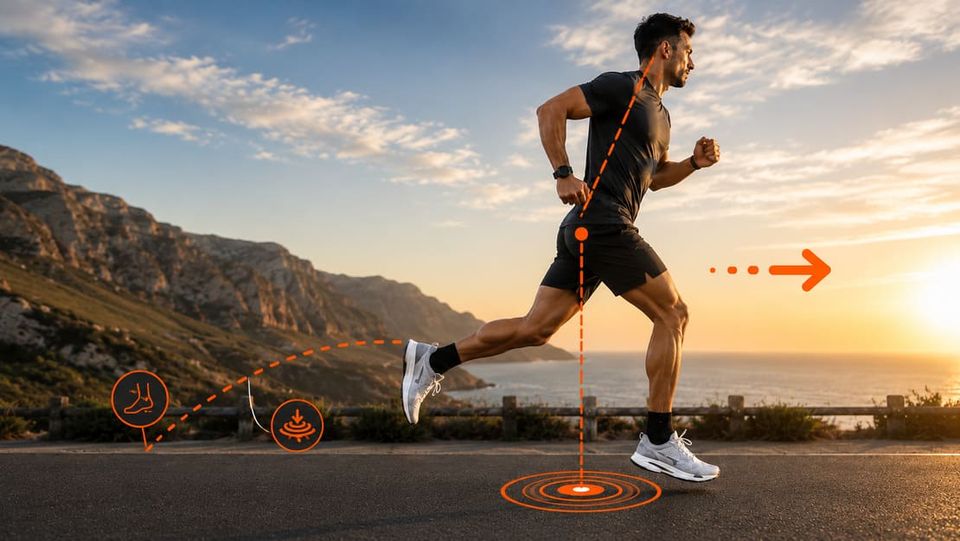
Are you running the wrong way? 3 technique mistakes that slow you down
12 May 2026 · 3 min
Ten seconds of video become a skeleton, seven measures and, when it helps, an exercise to try. Here’s the app, from start to finish.

Giulia Rossi
Wed 21 Oct · Treadmill · 120 fps
Front knee at contact
L 31.1° · R 24.7°
The right knee is 6° straighter than the left
Approximate · Few foot contacts, uncertain keypoints or video below 60 fps.
ExcellentOverstriding
L 2.3° · R 5.6°
The right foot lands with the shin angled 3° more than the left
ExcellentBack knee at contact
L 31.0° · R 69.7°
Approximate · The back leg is often the one far from the camera, hidden by the other.
ExcellentTrunk lean
There’s no universal threshold for lean: it depends on speed and style.
DescriptiveGiulia’s running form at a glance
Landing
The foot lands under the body with the knee slightly bent: an efficient foot contact.
Leg recovery
Likely, the back leg recovers well and comes forward quickly.
Trunk
The trunk leans forward about 5° throughout the run.
Before. Phone steady at hip height, side-on, the whole person in the frame. You read them the first time; after that, you skip them.
How to record · 2 of 3
Side-on, head to toe
The person should be side-on, fully in the frame and filling at least a third of its height, ideally half.
15 seconds. A five-second countdown with beeps to get going, then recording: at 120 frames per second, if your phone supports it, you get the finest detail and the most reliable measures; 60 works fine too. On a treadmill, on the road or on a track.
A few seconds. Move the window to the stretch where you run most evenly. Already have a video? Import it from Photos or Files.
Choose 10 seconds
Move the window to the stretch where you run most evenly.
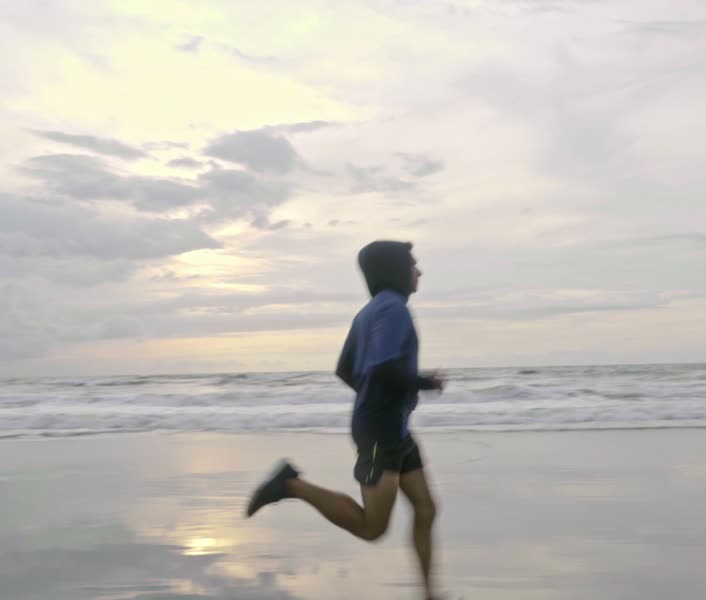
About a minute. It finds the skeleton in every frame, the foot contacts for each side and the angles that matter. All on the phone.
Analyzing your run
744 of 1,200 frames. You can put the phone down: the video doesn’t leave it.
Right away. A card for each measure, with the two sides compared, and your running form described in three sentences.
Giulia Rossi
Wed 21 Oct · Treadmill · 120 fps
Front knee at contact
L 31.1° · R 24.7°
The right knee is 6° straighter than the left
Approximate · Few foot contacts, uncertain keypoints or video below 60 fps.
ExcellentOverstriding
L 2.3° · R 5.6°
The right foot lands with the shin angled 3° more than the left
ExcellentBack knee at contact
L 31.0° · R 69.7°
Approximate · The back leg is often the one far from the camera, hidden by the other.
ExcellentTrunk lean
There’s no universal threshold for lean: it depends on speed and style.
DescriptiveGiulia’s running form at a glance
Landing
The foot lands under the body with the knee slightly bent: an efficient foot contact.
Leg recovery
Likely, the back leg recovers well and comes forward quickly.
Trunk
The trunk leans forward about 5° throughout the run.
Front knee at contact
L 31.1° · R 24.7°
The right knee is 6° straighter than the left
Approximate · Few foot contacts, uncertain keypoints or video below 60 fps.
ExcellentOverstriding
L 2.3° · R 5.6°
The right foot lands with the shin angled 3° more than the left
ExcellentPause the video where you need it and draw on top, like on a whiteboard. Show an athlete or a patient exactly what you see.
Front knee at contact
L 31.1° · R 24.7°
The right knee is 6° straighter than the left
Approximate · Few foot contacts, uncertain keypoints or video below 60 fps.
ExcellentOverstriding
L 2.3° · R 5.6°
The right foot lands with the shin angled 3° more than the left
ExcellentThe movement is the one measured from the side; the body’s depth is built.
Drag it to turn it.
Tap “3D” on the video and the run becomes a skeleton you can turn: watch the movement on its own, a little from the side or from above, in slow motion.
Tap a card and you’ll find your foot contact drawn out, the value at every step and three answers. Pick one: the phone opens it.
Shin angle at contact, right side
Both feet touch down ahead of the knee.
Your foot contact
Step by step
Left 9.8° Right 11.2°
The angle of your shin at the moment your foot touches down. 0° means a vertical shin, with the foot under the knee; the higher the value, the farther ahead of your body the foot lands.
Gait retraining
Slightly higher cadence
Slightly quicker steps at the same speed.
When it may help
5 + 5 min
dose
—
rest
Low
effort
What to do
Evidence
Effect on form: moderate
Heiderscheit 2011; Lenhart 2014; Lieberman 2015; Schubert 2014 review.
A catalog of gait retraining, drills and strength. Each card says when it may help, what to do, what to watch for and which studies support it.
The analysis leads to a suggestion when the studies justify it, and first the app asks whether you have pain or an injury. Assign it to someone and their plan is ready as a PDF.
The Runify blog, inside the app: articles on training, recovery and mindset. The ones linked to your latest analysis come first.
After an analysis where overstriding has room to improve
12 May 2026 · 3 min
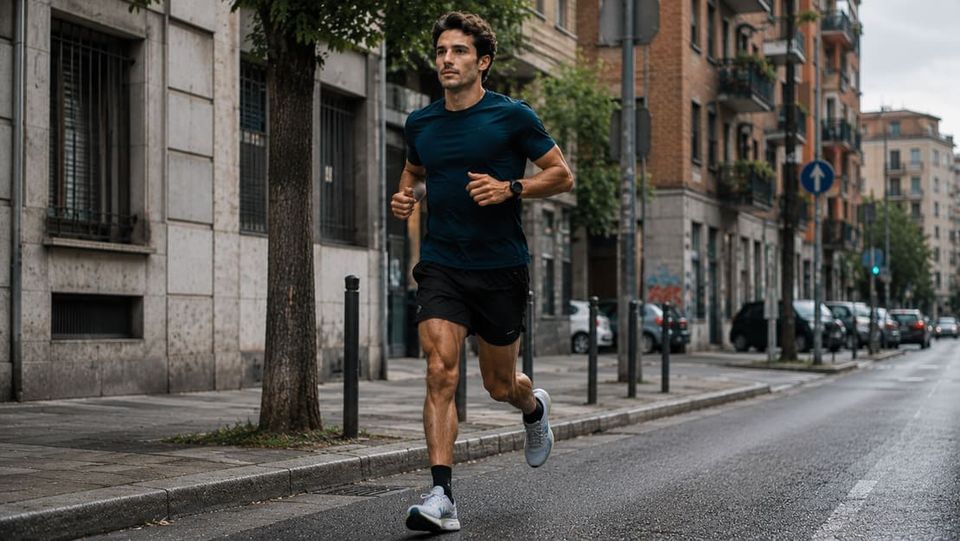
Running economy: the real secret of runners who never seem to get tired
22 May 2026 · 6 min

When not to change your running technique
23 May 2026 · 10 min
Learn
Understand
running.
The Runify blog: articles and guides to get started, get back into it and build consistency.
From your 21 October analysis
Overstriding
Room to improveAre you running the wrong way? 3 technique mistakes that slow you down
12 May 2026 · 3 min
Running economy: the real secret of runners who never seem to get tired
22 May 2026 · 6 min
When not to change your running technique
23 May 2026 · 10 min
Training
Periodization, intensity, volume, long runs. The core of the work.
35 articlesExplore
Recovery
Sleep, mobility, nutrition and your body’s signals, to stay healthy.
41 articlesExplore
Mindset
Handling fatigue, motivation and the mental side: the part of the work no one sees.
17 articlesExplore
Runify Motion is for iPhone. No subscription, no account: install it, record ten seconds and read your running.
Every feature, item by item